

The following was published by Apple Valley News Now on August 4th, 2026: https://www.applevalleynewsnow.com/news/yakima-county-completes-major-solar-project-to-reduce-electricity-costs-and-save-taxpayers-money/article_8d1286d8-7189-4092-bb48-eba1ff20a7be.html
The Brief
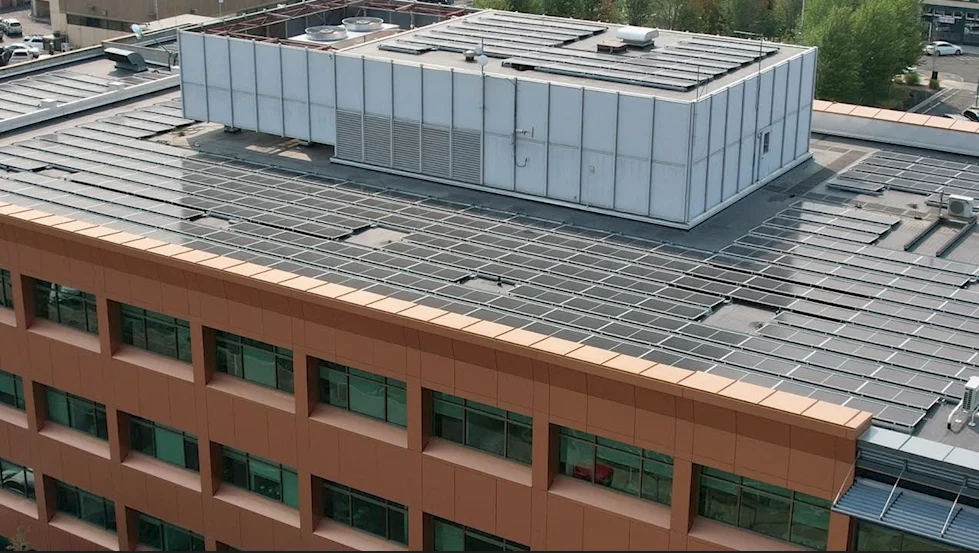
- Yakima County recently completed a major solar project across nine county-owned buildings funded through a $5.4 million grant from the Washington State Department of Commerce
- A 2024 assessment estimated the solar installations could save local taxpayers approximately $130,000 annually in electricity costs
- County officials say the project is expected to save about $5.9 million over the next 30 years, with a life expectancy of 20 to 25 years
YAKIMA — Yakima County officials say a new solar project could provide long-term savings for local taxpayers while reducing the county’s reliance on traditional electricity sources.
Yakima County recently held a ribbon cutting to mark the completion of a major solar project across nine county-owned buildings. The project was funded through a $5.4 million grant from the Washington State Department of Commerce, with installation work taking place throughout 2025. Ellensburg Solar served as the contractor on the project, while Olympia Community Solar provided technical advisory and assistance for the grant.
County Commissioner Kyle Curtis said the project was a significant undertaking. “All of last year, in 2025, they were doing installations, on pretty much all of the buildings. And so, last week, we just did a ribbon cutting and kind of a press release of what that project was,” Curtis said. A 2024 assessment estimated the solar installations could save local taxpayers thousands in electricity costs annually. This money the county could instead put toward other services and community needs. “And the cost of electricity has just gone up, up, up and up. But at the time, in 2024, when we looked at it, it was about $130,000 a year, we would be able to save our local taxpayers in utility bills. Right. And so we’re able to reinvest that into services and just, better allocate those tax dollars, in, in services that this community wants,” Curtis said.
The financial benefits of the solar project extend far into the future. County officials say the solar project is expected to save about $5.9 million over the next 30 years. The solar panels should have a life expectancy of 20 to 25 years, providing decades of renewable energy generation. Beyond the financial savings, Curtis says putting solar panels on existing buildings preserves land and other undeveloped areas while still generating renewable energy.
“This project was important twofold. One, it was we were able to save the taxpayer some dollars, but two, I think it really shows if you’re going to do solar, the best way to do solar, in my opinion, is to do it on already disturbed land. So on top of buildings, on top of warehouses, on top of areas that are already disturbed versus, you know, productive agricultural lands,” Curtis said.
The project represents a practical approach to renewable energy that balances financial and environmental considerations. By utilizing existing structures, the county maximizes the benefits of solar energy without consuming undeveloped land. Longtime Yakima resident and community advocate William Chichenoff says he would like to see more local facilities take advantage of renewable energy, including schools. He points to the long-term financial benefits for both residents and the broader community.
“If they don’t want solarize the schools in the other areas, you know, it’d be really nice that we start solarizing and start work on renewable energy, because the the poverty level in my community, this would help a lot to have a publicly owned electricity if they weren’t paying electricity bill. Could you imagine, what? Some of these kids could be getting new bikes. New, I mean, just like a nice pair of shoes,” Chichenoff said. Chichenoff’s comments highlight how energy savings in public institutions could free up resources for other community priorities. By reducing electricity costs, schools and other public facilities could redirect those savings toward educational programs, student services, and other community needs.
The county’s solar project demonstrates how strategic investments in renewable energy can provide both immediate and long-term benefits. The $5.4 million state grant allowed the county to implement the project without using local tax dollars, making it an efficient use of public resources. As electricity costs continue to rise, the solar project provides Yakima County with a hedge against future rate increases. The renewable energy generated by the panels will help stabilize the county’s energy costs and provide predictable savings for years to come.
 Español de México
  English